
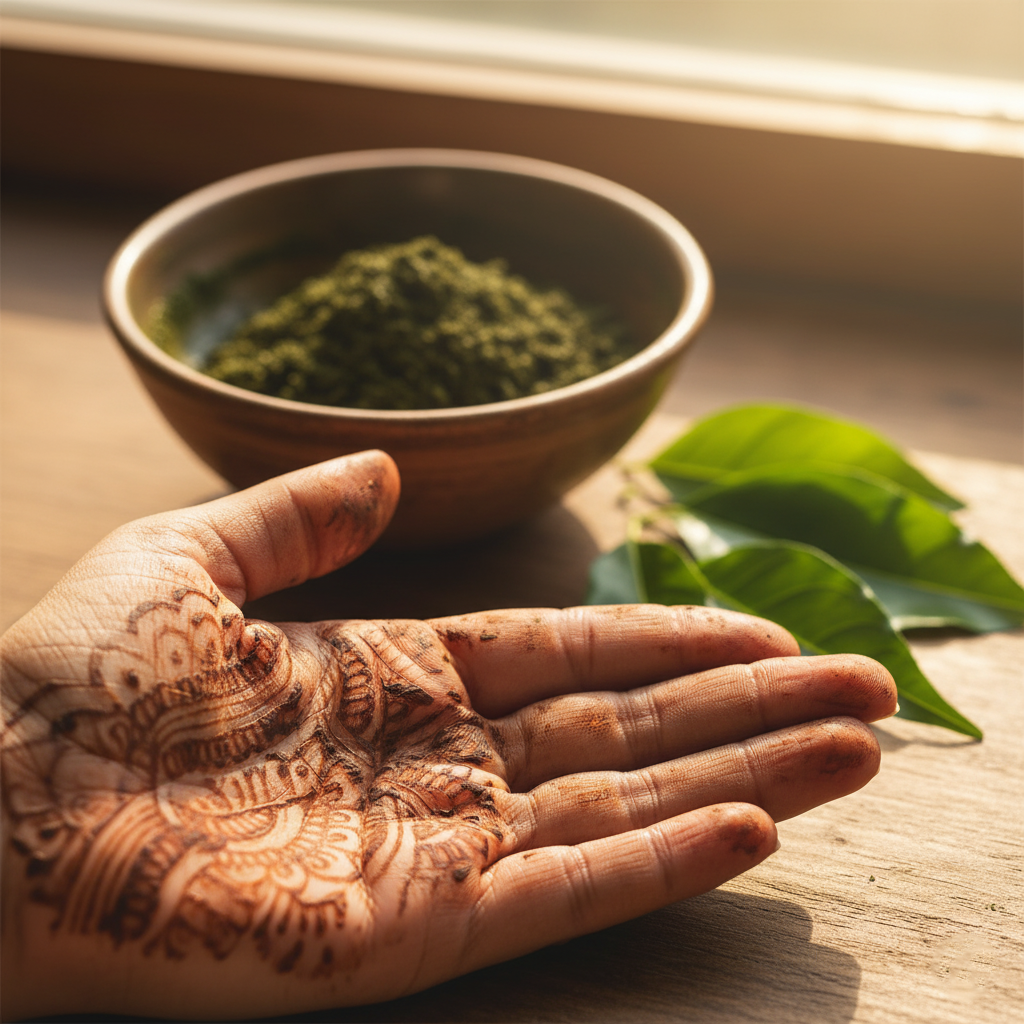
Mehendi has been a part of Indian culture for centuries. It is used during festivals, weddings, and celebrations, symbolizing joy and tradition. While natural henna has always been safe and skin-friendly, the market today is flooded with instant or chemical-based mehendi that promises quick, dark results. However, the convenience of fast color often comes with serious risks.
This article explains the difference between natural henna and chemical mehendi, and how instant formulas can harm your skin and long-term health.
What Is Natural Henna?
Natural henna is made by grinding the leaves of the henna plant into a fine powder. It is completely plant based and has been used for generations. When mixed with water, lemon, or essential oils, natural henna slowly stains the skin in a reddish-brown shade.
Key features of natural henna:
- Takes 6 to 8 hours to develop color
- Gives a brown or reddish tone
- Rarely causes allergies
- Has natural cooling properties
- Safe for most skin types
What Is Chemical or Instant Mehendi?
Instant mehendi, often sold as black henna or fast color henna, includes chemical additives. These additives speed up the staining process and create a very dark or black shade within minutes.
Most instant mehendi contains PPD, also known as Paraphenylenediamine, a strong chemical dye used in hair colors. While PPD is allowed in certain products under controlled conditions, it is not safe for direct application to the skin.
Chemical mehendi cones may also include artificial fragrances, preservatives, and color developers that increase the chances of irritation or long-term damage.
How Chemical Mehendi Puts Your Skin at Risk
- Immediate Skin Reactions
Chemical mehendi can cause burning, itching, redness, and discomfort within minutes of application. These reactions indicate that the skin is responding negatively to harsh chemicals.
- Blisters and Chemical Burns
High concentrations of PPD can create painful blisters or burns. These can take weeks to heal and may leave permanent marks.
- Allergic Responses
PPD is one of the most allergenic cosmetic chemicals. Even a small amount can cause swelling, rashes, or inflammation. In severe cases, the reaction can spread beyond the area where mehendi was applied.
- Long-Term Sensitization
A single exposure to chemical mehendi can make the skin permanently sensitive to PPD. This means the person may develop lifelong allergies to:
- Hair dyes
- Textile dyes
- Leather products
- Certain cosmetics
This long-term sensitization can affect daily life and future grooming choices.
- Permanent Skin Damage
Chemical mehendi may leave behind:
- Scars
- Dark patches
- Loss of skin color
- Rough or damaged skin texture
Such effects can be long lasting or permanent.
Natural Henna vs Chemical Mehendi: Key Differences
Safety
Natural henna is generally safe and does not harm the skin. Chemical mehendi contains strong dyes that can cause allergic reactions and burns.
Color Development
Natural henna develops slowly, taking hours to show full color. Chemical mehendi stains quickly because of chemical boosters.
Color Shade
Natural henna produces shades of brown or red. Chemical mehendi produces dark brown or black stains that look unnatural.
Ingredients
Natural henna comes from plant leaves. Chemical mehendi contains synthetic dyes, preservatives, and artificial perfumes.
Long-Term Effects
Natural henna has no long-term side effects. Chemical mehendi can cause permanent skin sensitivity and health risks.
How to Identify Natural vs Chemical Mehendi
Use these points to differentiate between safe and harmful products:
- Natural henna does not give instant dark color
- Natural henna smells earthy, not like strong perfume
- Chemical mehendi cones often promise fast, dark or black stains
- Ingredients such as PPD, para dyes, or synthetic color developers indicate chemical mehendi
- Natural henna paste is usually green to brown, not black
Why You Should Choose Natural Henna
Choosing natural henna protects your skin from harsh chemicals and long-term reactions. It may take more time to develop, but it is far safer and offers a traditional, authentic result. Natural henna also cools the skin and nourishes it rather than harming it.
Final Thoughts
Instant or chemical mehendi may seem appealing due to its quick, dark color, but it comes at a significant cost to your skin and health. Natural henna is always the safer, more reliable option. Understanding the risks of chemical ingredients can help you make better decisions and protect your skin from permanent damage.