
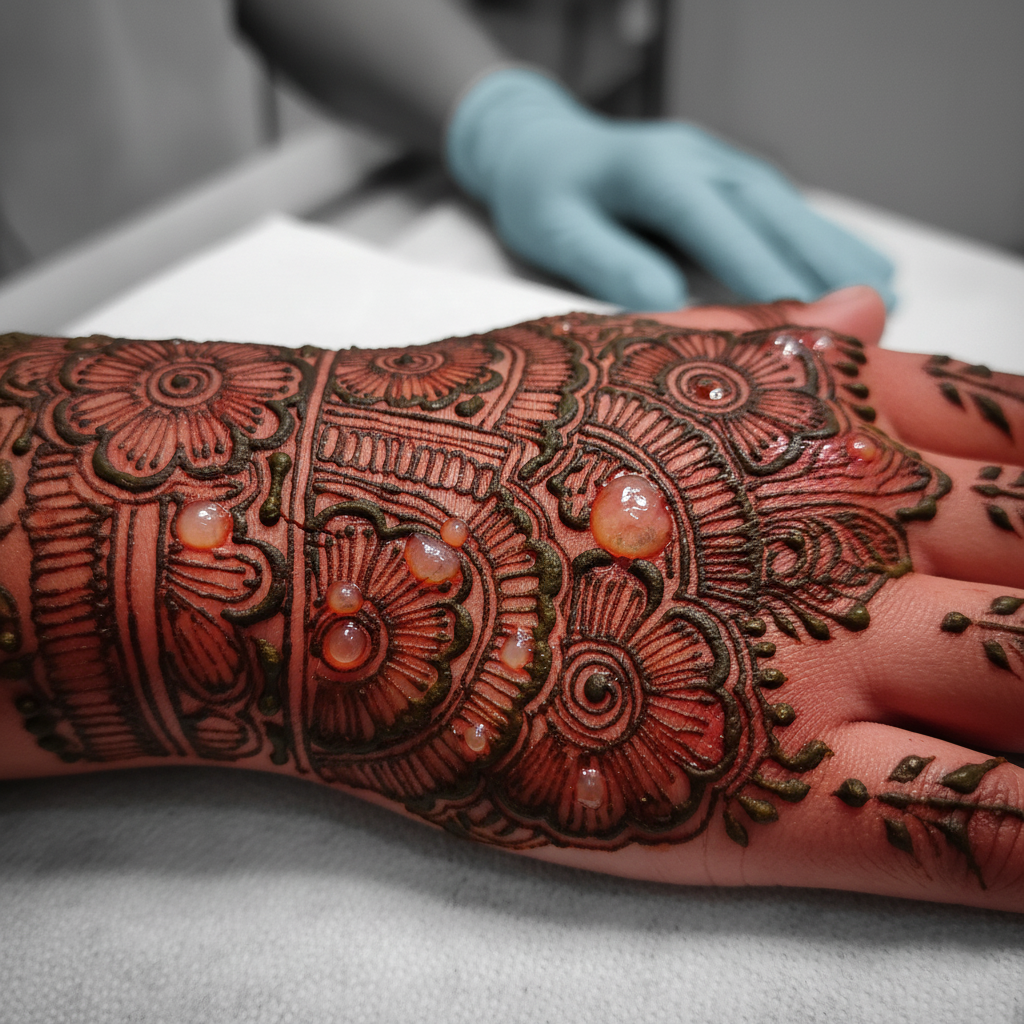
Instant mehendi has become popular because it promises quick, dark color in minutes. Many people use it for weddings, festivals, and last-minute functions without realizing the hidden danger behind its fast results. Unlike natural henna, instant mehendi often contains chemical dyes that can severely damage the skin. From mild irritation to permanent scars, the risks are far greater than most consumers realize.
This article explains real-life skin damage caused by instant mehendi, the symptoms you should watch for, and how you can protect yourself.
Why Instant Mehendi Causes Damage
Instant mehendi typically contains chemical dyes such as PPD, also known as Paraphenylenediamine. These chemicals are added to speed up color development and make the stain darker. However, they are not meant for direct application on skin. When applied, they react rapidly with the skin’s surface, which can trigger irritation, burns, and allergic reactions.
Real Cases of Skin Damage
Case 1: Severe Blistering After Wedding Mehendi
A woman applied instant black mehendi for her wedding because it promised deep color within minutes. Within a few hours, she developed painful blisters, swelling, and burning sensations on both hands. The blisters left dark patches that remained for months.
Case 2: Permanent Scarring in a Teenager
A teenage girl used black mehendi at a festival. Two days later, the design area turned red and started oozing. The reaction resulted in thick scars that did not fade even after several treatments.
Case 3: Allergy Triggered by a Single Use
A man applied instant mehendi for a family function. After the stain developed, he experienced itching and redness. Months later, when he used hair color, he had a severe allergic reaction. Doctors confirmed that the instant mehendi had sensitized his skin permanently to PPD-containing products.
These cases show that even one-time use of instant mehendi can create long-term problems.
Symptoms of Skin Reactions Caused by Instant Mehendi
Instant mehendi reactions can appear within minutes or after 24 to 48 hours. Common symptoms include:
- Redness and Irritation
The skin may appear red, warm, or irritated soon after applying the mehendi.
- Itching or Burning Sensation
A strong burning feeling or constant itching indicates a chemical reaction.
- Blisters
Small or large blisters may form on the design area, often filled with fluid.
- Swelling
The applied area may swell, and in severe cases, swelling can spread beyond the design.
- Oozing Wounds
Some reactions cause the skin to break open and release fluid. This increases the risk of infection.
- Scarring and Dark Patches
Once the reaction heals, it may leave behind scars or darkened skin that can last for months or become permanent.
Long-Term Effects of Instant Mehendi
Repeated or even single exposure to chemical mehendi can lead to:
- Permanent skin sensitivity
- Long-lasting allergies to hair dye and textile dyes
- Patches of discolored or uneven skin
- Roughness or changes in texture
- Permanent scarring
These long-term effects can impact grooming habits, confidence, and overall skin health.
How to Prevent Skin Damage
- Avoid Instant or Black Mehendi
If a cone promises fast, dark, or black color, it is likely chemical based. Choose natural henna instead.
- Read Labels Carefully
Avoid products that list PPD, para dyes, artificial color developers, or strong fragrances.
- Do a Patch Test
Apply a small amount on your inner arm. If there is any irritation, do not use it on your hands or feet.
- Choose Verified Brands
Unbranded market cones often contain unsafe ingredients. Choose brands that disclose full ingredient lists.
- Teach Children and Teens
Young skin is more sensitive. Make sure younger users understand the danger of instant mehendi.
- Consult a Dermatologist for Reactions
If you notice swelling, blisters, or burning, wash the area immediately and seek medical help if symptoms worsen.
Why Natural Henna Is Safer
Natural henna comes from a plant and stains the skin slowly in shades of brown or red. It is far less likely to cause allergies and does not contain synthetic dyes. Although natural henna takes time to develop, it is the safest and most traditional option.
Final Thoughts
Instant mehendi may offer quick beauty, but it comes with serious risks that can affect your skin for years. Real cases show that burns, scars, and allergies are far more common than people think. By choosing natural henna and avoiding chemical-based products, you can protect your skin and prevent long-term damage.