
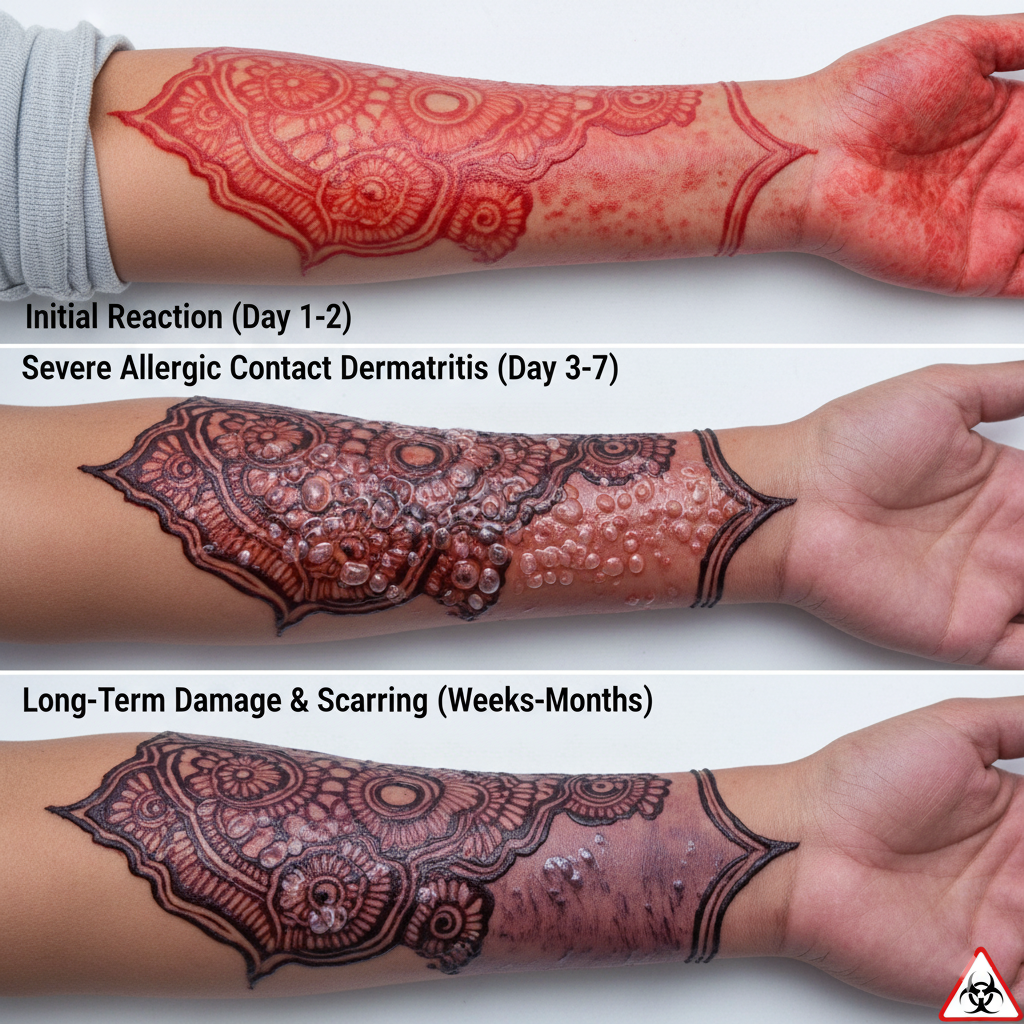
Black mehendi has become popular for its quick, dark color and hassle-free application. It is widely used at weddings, festivals, and by mehendi artists promising faster results. But behind this convenience lies a serious problem. Most black mehendi cones available in the market are not natural at all. They contain strong chemicals that can harm your skin, trigger severe allergies, and even cause long-term damage.
This article explains the hidden risks of black chemical mehendi and why every consumer should be cautious before using it.
What Makes Black Mehendi Chemical Based?
Pure henna, made from the henna plant, stains the skin slowly and gives an orange-brown to reddish-brown color. Black mehendi, however, produces an instant dark brown or jet-black color. This is possible only because it contains chemical dyes such as PPD, also known as Paraphenylenediamine.
PPD is commonly used in hair dyes, but it is not safe for direct skin application. Many black mehendi cones contain high concentrations of this chemical to deliver quick results.
Side Effects of Black Chemical Mehendi
- Skin Irritation and Redness
The first sign of a reaction to black chemical mehendi is irritation. The skin may become red, itchy, or sensitive within a few hours of application.
- Formation of Blisters and Burns
High levels of chemical dyes can cause painful blisters, rashes, and chemical burns. These burns may leave marks that take weeks or months to fade.
- Swelling and Inflammation
Some people experience intense swelling on the applied area. In severe cases, the swelling can extend beyond the design and affect larger portions of the skin.
- Oozing and Crust Formation
A chemical reaction on the skin may create wounds that ooze or form crusts. This can lead to infections if not treated properly.
Allergies Linked to Black Chemical Mehendi
- PPD Allergy
PPD is a highly allergenic substance. Even a small amount on the skin can trigger allergic reactions. Once a person becomes allergic to PPD, the sensitivity often lasts for life.
- Long-Term Sensitization
A single use of black chemical mehendi can make the skin permanently sensitive to hair colors, textile dyes, leather products, and certain cosmetics. Even mild exposure can trigger allergies later.
- Delayed Allergic Reactions
Reactions to black mehendi may not appear instantly. Many people experience symptoms 24 to 48 hours later, making it harder to detect the cause.
Long-Term Skin Damage
- Permanent Scarring
Chemical burns from black mehendi can leave deep scars on the hands or feet. These scars may not fade completely even with treatment.
- Skin Discoloration
Some people develop dark patches or uneven pigmentation in the areas where chemical mehendi was applied. This discoloration can last for months or become permanent.
- Loss of Skin Texture
Repeated exposure to chemical mehendi can damage the skin’s natural texture, making it rough, sensitive, or prone to rashes.
Why Black Mehendi Is More Dangerous Than Natural Henna
Natural henna rarely causes allergies and has been used safely for centuries. It takes time to develop its color, usually several hours, and gives a natural brown shade.
Black chemical mehendi is different because:
- It stains the skin unusually fast
- It produces an unnaturally dark color
- It contains chemical dyes not meant for direct contact with skin
- It offers short-term beauty at the cost of long-term health risks
How to Stay Safe
Here are simple ways to avoid the risks of chemical mehendi:
Choose natural henna only
Look for products that mention pure henna leaves as the only ingredient.
Avoid black cones with instant results
If a mehendi cone promises instant dark color, it is most likely chemical based.
Read labels carefully
Avoid mehendi that lists PPD, para dyes, artificial color developers, or fragrance chemicals.
Do a patch test
Apply a small amount on your skin. If there is any itching or burning, wash immediately and avoid use.
Buy from trusted brands
Avoid local, unbranded mehendi cones commonly sold in markets.
Black chemical mehendi may look attractive and convenient, but the risks are too serious to ignore. From mild irritation to severe allergies and lifelong skin sensitivity, the consequences can be long lasting. Choosing natural henna is always safer and far better for your skin.